I don’t disagree, especially with the wide range of abilities that psionics can produce. However, I think there is more to it that makes it work well with Scifi.
There are probably other ways to describe it, but psionics can fall into two categories:
The next evolution of humanity
Unlocking (or enhancing) the full potential of the human mind
Both of these ideas fall within the realms of Scifi, and can make a lot of sense within the setting.
EDIT: As an example of the first one, has anyone read “The Stars My Destination” from the '50s? Here, the next evolution of humanity was to learn how to teleport, and, while the writing and story aren’t great (although there are some interesting ideas), it deals with it in a very Scifi fashion.
From Wikipedia: The novel included some notable early descriptions of proto-science and fictional technology, among them Bester’s portrayal of psionics,[11] including the phenomenon of “jaunting”, named after the scientist (Charles Fort Jaunte) who discovered it. Jaunting is the instantaneous teleportation of one’s body (and anything one is wearing or carrying). One is able to move up to a thousand miles by just thinking. This suddenly revealed, and near-universal ability, totally disrupts the economic balance between the Inner Planets (Venus, Earth, Mars, and the Moon) and the Outer Satellites (various moons of Jupiter, Saturn, and Neptune), eventually leading to a war between the two. Jaunting has other effects on the social fabric of the novel’s world, and these are examined in true science-fictional fashion. Women of the upper classes are locked away in jaunte-proof rooms “for their protection”, the treatment of criminals of necessity goes back to the Victorian “separate system”, and freaks and monsters abound.
Well this is a biased opinion, but I’d have to say 3.5. The only other one I have any actual play experience with is 5, which is a very simple and very weighted-in-players’-favor edition, good for bringing in new casual fans, but with not enough bells and whistles to let you do anything mechanically sophisticated. The older editions are pretty much always either needlessly overcomplected (Thac0, anyone?), or else hamstring your choices completely (your elf can be a fighter and/or a wizard, your cleric can only have blunt weapons, and don’t even bother trying to play a Thief). And what little I know of 4 suggests that it basically existed to force you to buy miniatures and power cards. Pathfinder is just a ripoff of 3.5, but I don’t approve of most of their changes. And I do like some things from 3.0 which weren’t brought forward, but there just wasn’t enough there to make a fully playable edition.
Edit - I’d love to hear some of these issues you have with DnD, Walking Target. Feel free to start a new thread if you feel up to getting into it.
It’s mainly stuff like the fact that I am not a fan of class-and-level RPG systems generally and D&D is the ur-example of said systems. There’s also the “linear fighter, quadratic wizard” problem as characters level up and is one that 4th edition took steps to actually address, thus my preference for it.
We made our own power cards out of index cards and while it really requires a grid to handle combat, all other editions of D&D assume you’re using one as well. You can get by with paper standees or spare dice just as easily as miniatures.
Have you checked out 5E? While it does still have some degree of LFQW, it’s much better than 3E in that respect. If wanting to reward players for picking Fighter, I’d definitely go for 5 over 3; I don’t really know where 4 sits on that scale.
I have not, but that’s mainly a consequence of simply not having much time to role play in general since its release. I had a game group for a while since I moved here but before my kid was born and then the pandemic, but they were a solidly Pathfinder group (which is where I played that at all).
I had heard from others before that 5e took some concepts from 4e in trying to fix some of those issues while also layering in more “classic” D&D tropes/assumptions about gameplay, but I don’t know if I’ll ever actually get a chance to/be in a position to bother with giving it a try. Again, since I’m not a fan of class-and-level systems at a basic level, if I’ve got choices with what to play I’d probably try a different system before more D&D.
I’ve played all five editions (six if you count 3.5 – and seven if you count Pathfinder ).
It depends on what you want out of the game.
For our current game group, 5e is the best (if we want to play D&D), as it is versatile, simple, and clean. We prefer lower levels (our current bi-weekly campaign has been going for more than 4 years, at this point, and they just reached 6th level!), so the issues 5th has with higher levels don’t usually come into consideration.
4th has a significantly different feel, style, and structure to it that doesn’t fit the way we usually play.
I personally love 3.5 (and Pathfinder) because I do enjoy crunchy games with lots of options, but that doesn’t match with what the folks I usually run games for want.
I ran 2nd – or a home-brewed version, anyway – for more than two decades, so I have a lot of nostalgia for it, but it has significant issues.
I feel like 1st is a horror show in so many ways, but I would never tell someone they were wrong to enjoy it.
But I agree with WalkingTarget: Level-based systems are annoying. I have my own in-campaign justification/explanation of it so that can at least make sense, but the concept in general is just ridiculous. (Especially given the level of power folks actually get to! )
Levels and class/race and such don’t bother me; I can explain why they make perfect sense in-universe. What I struggle with is the Hit Point system. You’ve seen that “I still have 1 left” meme, right? That plus the fact that the game rules don’t have any way of representing permanent injury (eg an arm cut off or an eye gouged out) do cause me serious issues, which can only be addressed by assuming that the game is a pretty “four color” universe, where violence isn’t all THAT horrible a fate to suffer.
QotD #164 Reply: I was late to the party, and only got into the game after 2014, so I’ve only actually played 5th Edition. And I like it, although I suppose that isn’t saying much, as I don’t really have anything to compare it to . . .
From what I know of the other Editions (which I think is a not-insignificant amount), I think 3rd/3.5 is the one (two?) I would most want to play.
However, I know literally nothing about Pathfinder besides that it is a thing that branched off from D&D.
Well, all the answers to this QotD are. ; )
I’m more into the storytelling aspects, really, so this doesn’t bother me as much. I still like and care about mechanics, mind you.
True, but from flipping through the 4e Players’ Handbook (which I got from my friendly local library once), it seemed like the Classes were a bit too similar for my tastes. Of course, I’ve never actually played any of those Classes, so I could be completely off-base.
I can attest to this.
Well, actually, 5th Edition does have a variant rule for permanent injury, just like you described.
Personally, as a player, though, I wouldn’t want that to happen to my character. If I wanted to play a character with only one hand or only one eye, I’d play the character that way from the beginning.
Question of the Day #165: What are your thoughts on Japanese animation (or anime) compared to more traditional “Western” animation?
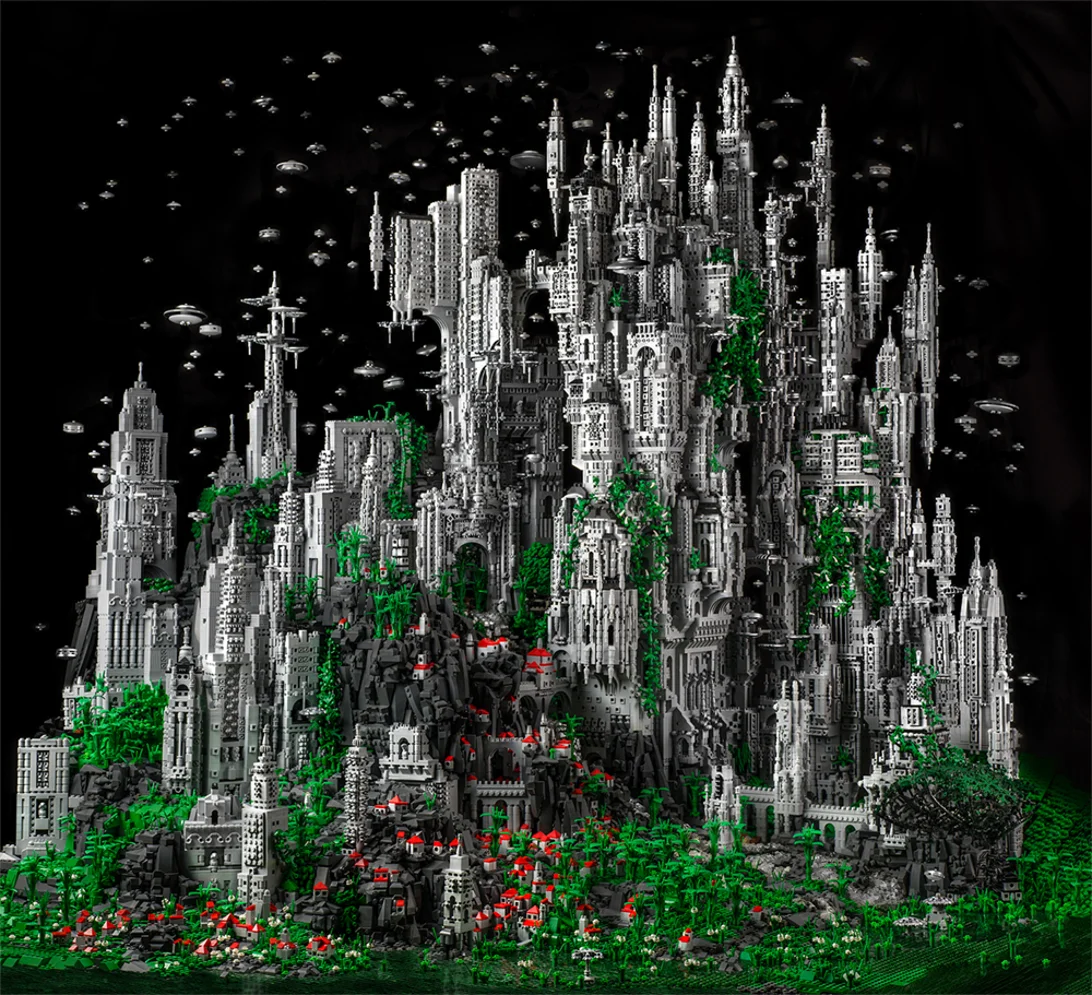
The way I figure it, rules mechanics are like the little pegs and sockets on Legos which allow them to snap together. If you’re just playing with blocks, you can stack them together carefully so that they stay balanced in place, but the Lego parts allow you to create more complex and interesting structures that wouldn’t work without that technology, and the more sophisticated the design of your Legos is, the greater the possibilities for things you just couldn’t build with a simpler set. (Personally I don’t think Legos are all that, but they’re something most people are familiar with. My own tastes run more towards things like an Erector Set, or the thing I had when I was a kid, which was called Capsela, and had little working motors and such inside of plastic bubbles that kept a kid from messing with the actual machinery.)
I’d appreciate a page cite so I can have a look for myself, as I had forgotten that specific subsystem. But in general the suggested alternate rules in the DMG and other such books for 5E are all pretty half-baked, little more than a reminder that the GM is allowed to make stuff up whenever the books don’t cover a situation in detail. It’s nice if they give you a little table with five or so bits of rules to represent a few of the more common complications that can come up in a game, but it’s almost certain that I’d wish for more like fifty of them, and a table for rolling to see which ones are more likely to occur depending on the enemy’s attack type, fighting stance, and the general part of the target they’re trying to aim for. There’s probably a product on DM’s Guild that does exactly what I want, but I’m a bit of a purist when it comes to using officially supported core game content, which virtually all players will accept as canon, versus somebody’s homebrew (even if it’s really good) that I have to talk a GM into using, without opening the floodgates for him to have to approve all other third party material regardless of its quality.
The risk of bad stuff happening to your character is part of what the epic fantasy genre is all about. You’re not really playing a hero if you aren’t going up against real risk. Personally I think the trend toward “empowering” the players, instead of putting them through the wringer, is part of what breeds “murder hobo” behavior in gamers. The core of what gaming is all about is the idea that your actions have consequences, for good and for ill. When your players don’t feel real fear for the fate of their beloved characters, it’s little wonder they start acting like they’re playing Quake deathmatch with all the cheats on, so nothing they do matters and they just screw around for the lulz. The GM should be cautious about imposing changes on a player which will affect how they can roleplay, but unless the player stringently refuses to roleplay a character who is recovering from some debilitating harm, the possibility should always exist that such a thing might be the outcome of the player’s choices in the gameworld. It shouldn’t happen “just because”, but it shouldn’t NOT happen “because I say so” either.
I’m not a huge fan of either; I look at the quality of the writing and the voice acting and the animation in either case, but in general I think it’s difficult to get a good performance when the actors are recording their lines in audio booths rather than actually being on a set or a location shoot. The ability to tell a really good story is often helped rather than hampered by the technological limitations of the craft, and the fact that animation lets you imagine things you couldn’t do in live action is not always for the better. You do occasionally get works of surpassing quality, such as “Princess Mononoke” or the Paul Dini Batman cartoon, but in general it’s rare for anything animated to turn out especially well. I have a slight bias against anime, just because I really don’t care for the sound of the Japanese language, and I get really tired of the more overplayed tropes of the anime genre, but Western animation also struggles to impress me because of the social assumption that it’s mostly for kids.
Yeah, that seems too complex for D&D 5e. If you want something like that, though, I would recommend GURPS. Well, I would recommend it, except for the fact that the last time I mentioned it on here, there was a general negative consensus on its quality.
I’m not against consequences. I agree with everything you’re saying. I’m fine with my character dying even, I just feel like this is something somehow different.
QotD #165 Reply: I am not a patriotic US Citizen, but the one thing that I am patriotic about is animation.
Aye, me too.
This isn’t a flaw of the animation itself, in my opinion, but rather a social thing that restrains its potential.
Question of the Day #166: Would you rather be The World’s Best Mathematician or Writer?
QotD #166 Reply: Yeah, being The Best Writer sure would be more fun, probably. On the other hand, being The Best Mathematician could probably better the lot of humanity more.
I’ve shifted from being more of a cat person to being more of a dog person over recent years, although it’s still only like a 60/40 thing. Dogs are filthy, needy, and have a habit of barking at me everywhere I go, but I’ve come to find the aloofness of cats irritating. I haven’t had a dog in my house since I was 13, while we’ve never been without a cat; I suppose familiarity breeds contempt.
Teleport the necessary translators around the world as needed, train up all the out-of-work transportation industry people to do it if you want. Just get us that sweet, sweet transportation tech.
+1 to what WT said. We already have universal translators, or something close to them at least; even a magically perfected version of them wouldn’t be worth as much as a buggy, limited, ultra-expensive teleportation process. Just the option of replacing the trucking industry in case we suddenly run totally out of oil, that alone would make teleportation technology infinitely valuable to us.
QotD #169 Reply: Yeah, when I think about it, Universal Translators aren’t all that innovative, but Teleporters are, well, scientifically impossible (as far as I know). (Breaking physical laws does make me grumble a bit, though.)
We do?
Well, you still need to power the Teleporters somehow.
Question of the Day #170: Control of machines or control of living organisms?
 ).
).

 (Especially given the level of power folks actually get to!
  )
)