The History of Venture Comics!

Do they have something vaguely like that with amber “zombies” or something? Or maybe beeswax? Don’t know the game well, but that tickles a memory from something I heard in a review.

Waxmen could fit with a bee- or apiary science-themed villain too. Hypnotized by all the buzzing and then processed into self-perpetuating wax zombies. Flashbacks to the beehive scenes from the Mysterious Island movie way back when. Have to love those Harryhausen stop-motion bees. :slight_smile:

1 Like

There is a lot of weird bee stuff in Heart, for sure; there’s a whole class built around having a hive of magic-suppressing bees living inside you. I don’t recall amber zombies specifically, but there’s also a lot of weird stuff so I wouldn’t be surprised to learn I’d forgotten it.

But for now: it’s time for the Silver Age! Sort of. It’s complicated. Because, see, we’re looking at…

Madame Liberty

Real Name: Marianne Leblanc, First Appearance: Madame Liberty #157, January 1955
Background: Struggling, Power Source: Accident, Archetype: Shadow
Personality: Stalwart, Principles: Mask, Liberty

Status Dice: Green d8, Yellow d8, Red d10. Health: 30 [Green 30-23, Yellow 22-12, Red 11-1]
Qualities: Stealth d12, Persuasion d10, Alertness d8, Criminal Underworld d6, Finesse d6, Fight For Liberty d8
Powers: Awareness d10, Shapeshifting d8, Agility d6, Invisibility d6

Green Abilities:

  • Slippery [A]: Attack using Finesse. Remove one physical bonus or penalty, Hinder a target using your Min die, or maneuver to a new location in your environment.
  • Stay Quiet [A]: Attack using Stealth. Defend using your Min die against all Attacks until your next turn.
  • Play Innocent [R]: If you haven’t acted yet in an action scene, you may Defend against an Attack by rolling your single Awareness die.
  • Principle of the Mask [A]: Overcome using knowledge from your civilian life and use your Max die. You and each of your allies gain a hero point.
  • Principle of Liberty [A]: Overcome in a situation where you are restricted or bound and use your Max die. You and each of your allies gain a hero point.

Yellow Abilities:

  • Doe Eyes [A]: Hinder any number of targets using Persuasion. Use your Max die.
  • Put On Muscle [A]: Attack using Shapeshifting. Hinder that same target using your Min die.
  • Fade Into Shadow [R]: When you would take damage, Defend against that damage by rolling your single Stealth die.

Red Abilities

  • Take Advantage [A]: Attack using Stealth. Use your Max die. Remove any number of penalties from the target. Add your Min die to the Attack each time you remove a penalty.
  • Light of Liberty [A]: Hinder using Persuasion. Use your Max+Min dice. Boost yourself or an ally with your Mid die.

Out

  • Defend an ally by rolling your single Presence die.

The imposition of the Comics Code left Venture Comics in an awkward place. With several of their comics summarily destroyed, and a heavy eye falling on the rest, Venture only had two superhero titles between 1954 and 1958. Flatfoot Adventures endured the period without much fuss; the robot detective was already a stalwart champion of justice, and his exploits were easily adjusted to the Comics Code.
Madame Liberty had a more difficult road to tread. While she had never been aggressively sexual, she was a two-fisted spy who was also a woman, flirting with and then beating up dangerous enemies of freedom. The Code frowned on nearly every part of that, and in order to keep the heroine in play Venture was forced to make some adjustments to the character. Her costume was altered to show less skin, with a liberty bell symbol placed to more firmly make her a ‘superhero’ and not a femme fatale, and her backstory was quietly altered to remove any references to her criminal past. While Venture never overtly rewrote her history, stories referencing Madame Liberty’s past implied that she had been a struggling housewife whose husband had been killed late in the war, and that a mysterious accident gave her her shapeshifting powers and allowed her to seek justice for his loss.

The revised Madame Liberty was much less aggressive than her previous counterpart. She had a job in West Berlin as a stenographer for the American embassy, which she used to gather information to help protect the West from Communist incursions. The only person who knew her secret identity was her boyfriend Rick Wilson, who also generally served as the one to throw punches against Communists while Madame Liberty used her keen wits and shapeshifting skills to infiltrate and undo the latest supervillain’s plot to bring down the West.

Madame Liberty wasn’t a complete loss in this era. While she was less physical and more openly romantic towards Rick, many of her stories relied on villains underestimating her because she was a woman, which in turn allowed Venture to sneak in some of the feminist angles that had supported the character in the past. She still preferred to turn agents rather than kill them, offering chances at redemption that were uncommon for heroes in the time period, and she was still a brilliant tactician and clever infiltrator. But much of what made her special was lost.

Fortunately, it wasn’t lost for long. After the general success of Venture into the Unknown, Madame Liberty #200 unveiled a new costume for the heroine that was more in line with her Golden Age look than her current one, and over the course of the early 1960s she gradually shifted back to her original form. Her criminal past was referenced for the first time in almost ten years in 1963, and by 1965 Venture’s staff was largely ignoring this period as a cover that she had put on, and not her true identity.

In 1978, Venture went one step further. Liberty’s Dream Annual #1 introduced Madame Liberty and Reverie to another Madame Liberty, one that was being used by the fae to undermine faith in the heroine. It turned out that this was the Madame Liberty from the 1950s, who was a housewife who had loved the hero so much that when Madame Liberty vanished on a mission she had made a bargain to become her until she returned. Now the price was coming due, forcing her to undermine her hero’s reputation. The real Madame Liberty was able to save her doppelganger, whose powers were removed at the end of the storyline, ending that chapter of her history.

Behind the Scenes

I’m going to be honest, I’m futzing a bit here for the purpose of book layout. The space between 1954 and 1958 is a really weird one; the Golden Age is over but the Silver Age hasn’t actually started yet. I’ve included Madame Liberty on the Silver Age side instead of Gold mainly because I need a lieutenant to close out the previous age for layout purposes.

Narratively, I want to have one bad deep cut variant for each of the big four heroes, and Madame Liberty gets to go first. She’s kind of paralleling both Captain America and Wonder Woman in the 1950s, although Wonder Woman took longer to break out of the box. Madame Liberty gets lucky and Venture starts quietly taking chances on her more or less as soon as the Code isn’t looking at them quite as closely. Even if it takes a while for her to get back to her Golden Age finery, she’s only a drip for four years.


4 Likes

Gad, I hate that reaction so much even if this is one of the best uses of it I’ve seen. Granted that Green defensive reactions are rare as hen’s teeth, but this one is guaranteed never to get more than one use and might not even get that if someone passes you the initiative before you’re Attacked. Not what I call a good Green option, and made worse because Accident is saddled with three reactions and an inherent, leaving very little room for action abilities - and the other two reactions use the same trigger, so you really shouldn’t take both.

As I’ve said before, make it an (I) instead of an (R) and at least it would feel more meaningful than the de facto “sometimes gain a die roll’s worth of extra Health on round one” it is at present.

Blink. Oh, right. Hero Forge doesn’t have an actual “cracked bell” decal, does it? Can’t have everything, I guess. :slight_smile:

I imagine she would indeed struggle playing at being a 1940-50s housewife, yes. Good heavens, what a change. Although that era was full of salacious assumptions about widows, so she still has that going on even if it’s kept in the readers’ (dirty) minds so Wertham’s knickers don’t twist up on him.

Always thought it weird that Diana survived the Comic Code without ever being forced to change her costume significantly, and the godawful “white pantsuit” era was not only a voluntary choice by DC, they thought it would improve sales.

2 Likes

I’m a little disappointed you didn’t call him the iFlunky…

The Wickmen are wonderfully creepy. :+1:

I dunno, I kinda feel like precisely because they became so infamous, that almost guarantees that they’d make a return (or at least some sort or reference or cameo) modernly (i.e. '80s or later), but it’s your universe, and so your call.

Embrace the power, Friv! Drink deeply of its temptation! Use it to make your wildest ideas become realised!


Does that story give the fake Madame Liberty a name? Also, was she a French housewife or an American one?

Yeah, as soon as I read the bit about the “bad Madame Liberty” turning out to be an imposter, it screamed Captain America to me.

Yeah, I’ve never seen it in play, but still it looks to me to be pretty much worse than any other Defend reaction.

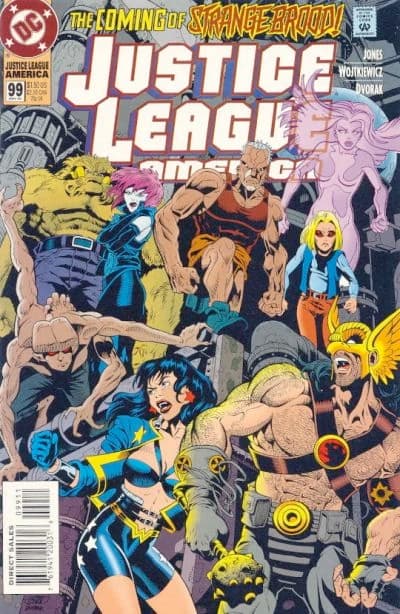
Wonder Woman is, I think, probably one of the more popular heroes who has had a great deal more distinct looks than most. Besides that one you mention, and numerous variations on the classic red-and-blue look, she also had the dubious “honour” of wearing the questionable black leather getup while she led the Justice League in the '90s:

3 Likes

You know, you’re probably right. To keep them deep cuts, I’ll add a single extra Wickmen story - some truly terrible X-TREME 90s summer crossover where a writer brings them back and then the storyline bombs hard because it’s still way too over the top. checks notes - okay, yeah. 1992 lets the Wickmen be part of the first Remnants annual, and take part in a summer crossover with Knightgrave and Twilight Carnival. It’s not a good crossover.

Definitely French, and she definitely had a name, but I have not bothered to create it. Probably Maria or Anna or something similar to, but not the same as, Marianne.

And yeah, I definitely agree with Ambush Awareness. It’s not a great ability and I will not use it unless it’s so thematic that I truly can’t resist.

My gut feeling is that it needs to be significantly dialed up if it’s going to be a once per fight thing. Something like “if you are Attacked by someone you haven’t engaged with yet in this scene, Defend against the Attack by rolling your single [power/quality] die. Boost yourself with the result.”

This does two things. First, it lets you use the power against enemies who are newly entering the scene, which feels more ambush awareness, rather than limiting it to “you have literally done nothing yet”. Secondly, adding the Boost makes it a bit more tempting to use.

2 Likes

I could see taking it if you’re already taking Reflexive Burst in Yellow (making the other Green reaction that shares its trigger even worse) and you really don’t need an energy type immunity for some combo or team synergy - but even then, I’d be tempted to go with one of the others RAW.

“Engaged” is kind of nebulous in mechanical terms (like “nearby” and “close” are) but you could easily make the bold part with “who hasn’t Attacked you yet” and have something similar that’s more clearly defined. The limitation on reactions should keep that from getting too far out of hand with minions, although it might break down in combination with Push Your Limits.

Giving it the p/q option for keying will make it very easy to get a large die in there, since almost every background has a d10 or d12 quality available where many of them lack even a d10 power. Quite rare for power source abilities to be able to key to qualities at all. That might be too strong, although Extradimensional’s Extrasensory Awareness ability does uniquely allow a quality key (but not a power).

I’m tempted to call that last one the best of the (few) Green defend reactions, although it really wants to combo with enough healing to claw your way back into a higher personal zone so you can squeeze extra uses out of it. The fact that it helps with going Out (which is a zone change, so it triggers) means you’re almost guaranteed three uses even without healing, and it might be many more if you roll well and the damage comes in slowly enough for your reactions to keep refreshing - or you have PYL.

Pretty strong argument for Flyer’s Barrel Roll being the best Green defensive react instead, but it’s still pretty situational. Being useless when you aren’t flying is a real Achilles’ heel for it.

Yeah, this is where the wording becomes why I haven’t revised it yet. Using who hasn’t Attacked you yet betrays the spirit of the power because you can go first, whallop a villain, and then use the power against their counterattack. It also means a villain could Hinder you twice and then Attack on turn 3 and you could still Defend against the ‘surprise attack’.

Engaged is more wibbly, and I’m not sure about it, but I want something like “anyone that hasn’t targeted you and that you haven’t targeted”.

2 Likes

Oh, right, that is an issue. How about “The first time you are Attacked by a target that you have not targeted yet this scene, Defend…” so you can’t have done anything requiring target selection to the foe, not even Hinder or Boost. You still can’t use it twice against the same foe since later Attacks obviously aren’t “the first time” any more. That doesn’t seem too confusingly worded.

On further consideration, I think I’ll just test it as:

(R) When an action scene starts, before anyone takes their turn you may declare you’re going last in the initiative order on round one. If you do so, when an enemy Attacks you that round, you may Defend against that Attack by rolling your single [power] die. If multiple heroes have this ability and opt to go last, the GM decides which of you actually goes last, second to last, etc. but all receive the benefit until they actually take their turn.

So now you can’t be shafted by initiative sequencing unless you allow it to happen, you get a solid perk in being able to react to any Attack in round one (potentially helping allies and preventing the enemy from nullifying the reaction by just not Attacking you), and you gain a unique degree of guaranteed control over who goes first in round two, which is almost worth a Green ability by itself.

I think that’s at a sweet spot where it’s actually good but doesn’t totally invalidate the Boost-on-personal-zone-change reaction or the damage type immunity as choices. Worth a test drive, anyway.

1 Like

Coven

Real Name: Glindora Galessi, First Appearance: Venture into the Unknown #22, Oct 1959
Approach: Leech, Archetype: Thief
Upgrade: Quality Upgrade, Mastery: Mysticism

Status Dice: Count the number of bonuses on you.
No bonuses: d6, 1-2 bonuses: d8
3+ bonuses: d10. Health: 25+5H [Upgraded 45 + 5H]
Qualities: Magical Lore d8, Stealth d8, Imposing d8, Obsessive d8
Powers: Weather d10, Infernal d8, Teleportation d6

Abilities:

  • Foulweather Fiend [A]: Attack using Weather. Use your Max die. Boost with your Min die. This bonus is persistent and exclusive.
  • Drain Energy [A]: Hinder using Magical Lore. Then move one bonus from the target to yourself that is equal to or smaller in size than the penalty created.
  • Overwhelming Magic [A]: Attack using Infernal, using your Max die. Add all of your bonuses to the Attack, even if they are exclusive, then destroy them. Gain a bonus of a size equal to the number of bonuses destroyed (to a maximum +4.)
  • Mystical Shield [R]: When Attacked, Defend yourself by rolling your single Weather die. If this negates the Attack entirely, Hinder that target and Boost yourself with that same die roll.
  • (U) Ancient Witch: Upgrade your Magical Lore, Stealth, and Imposing to d10.
  • (U) Master of Mysticism: If you have access to proper materials, automatically succeed at an Overcome in a situation involving harnessing magical forces.

Common Scene Elements:

  • Summoned Spirits: d8 minions. When a summoned spirit fails a damage save, it Boosts Coven with the result.
  • Summoned Elementals: d8 lieutenant. A summoned elemental has a bonus based on its element:
    • Earth: +2 to damage saves.
    • Fire: +2 to Attacks.
    • Wind: When it Hinders, it may affect up to two nearby targets.
    • Water: When it Attacks, it also Hinders with the result.
  • Summoning Circle: A multi-stage challenge with (H) segments. At the start of each environment turn, it rolls 1d6 and adds a bonus equal to the number of unchecked boxes. On a 1-3, it creates a summoned spirit, On a 4-7, it creates two summoned spirits. On an 8+, it creates a summoned elemental.

When Greenheart was re-introduced into the pages of Venture Comics in 1959, Joe Manzetta was faced with the question of what to do with her stable of villains. Like Madame Liberty before her, Venture Comics was toning down the overt feminism of the character while doing everything in its power to retain the underlying messaging. However, Greenheart’s villains largely fell into three categories: misogynistic men, dangerous magical forces, and the champions of New Rome who were largely both. With New Rome abandoned, and villains like Scion considered far too horror-adjacent to include, there was a scramble to find any of her classic villains worth reproducing.

The first villain that Greenheart faced wasn’t one of her classic foes – he was a simple strongman that she was able to overcome with her superior strength and the help of her animal friends. When he failed to make much of an impact, Manzetta decided to at least pull some name recognition from the past, introducing the Craven Conjurer of Crime, Coven!

The Silver Age Coven bore little resemblance to the ancient and deadly crone of the Golden Age. She was given a name - Glindora Galessi – and re-structured as an old but not superhumanly so woman, who would speak rhyming couplets in order to command ‘nature spirits’ and ‘dark forces’ that were very carefully not demons. Coven would inflict strange and relatively low-key curses on her foes, stealing their dreams in order to fuel her powers. She ran afoul of Greenheart when she stole the dreams of Val’s friend Ginnie Turner and used them to summon dream-spirits, forcing Val to track the witch down and break her hold over the town’s nightmares. Infuriating at having been foiled, Coven swore vengeance, and the battle against Greenheart was on.

Coven was not a particularly popular hero, and she would likely have been forgotten for good if it weren’t for the Champions of Truth. When the Congress of Deceit assembled in late 1961 to oppose the Champions, Manzetta wanted the villains to have a unifying theme beyond ‘five enemies of the Champions of Truth’, and the theme that he landed on was ‘wants a Champion’s power for themselves’. For most of the Champions, this was easy – Avarice and Steeldriver actively wanted the powers of Wonderer and Flatfoot, White Mantis had interest in reproducing the experiments that had created Madame Liberty, and Locksmith was trying to acquire Skybreaker’s spear. But the villain who wanted Greenheart’s powers was Doctor Freak, and he was too interesting as a loner to be folded into the group. On a whim, Manzetta suggested including Coven, who had sought out Greenheart’s power in the past, and the witch found a new life as the magical backbone of that team of villains. As a member of the Congress, Coven was able to begin hinting at her mystical past and moving away from cheap tricks, and her popularity slowly began to recover.

By the late 1960s, the Comics Code was loosening, and Coven loosened with it. Rather than taking the Mary Molotov route and having the character be someone else, Coven simply began to recover her Golden Age trappings, increasing the scope of her magic and gradually picking up new acolytes and key followers. In a storyline in 1969, it was revealed that Glindora was a fake name she had taken up in order to throw off some mystical foes; having defeated them, Coven gathered her witches in force once again and returned to her role as a murderous menace, leaving her Silver Age antics in the dust.

Behind the Scenes

Fans may recall that Coven was initially going to be a D-Lister who failed to transition over to the Silver Age, before I decided that I liked her and wanted to beef up Greenheart’s list of major antagonists. But that still left “how did they fix her”, which opened up the opportunity for the answer to be “badly, at first”. Coven gets a makeover as a goofy witch throwing around silly curses and turning people into ducks or whatever, and then she goes back to being ancient and deadly but probably still holds that little bit of an ironic edge, which is why she ends up with things like a minion who wants romance novels.

6 Likes

I like that quite a bit. Maybe allow a villain (and only a villain, no flunkies) to Overcome in order to add a segment to the challenge, even beyond the starting H value? Forces the players to keep her busy or she’ll not only keep undoing their work, she can actually wind up getting better summons if they’ve been ignoring the circle. Maybe add a 12+ result that calls up something even nastier. Bonus nostalgia points if it’s a baatezu or tanar’ri as a nod to the old devil/demon aliases TSR used in 2e AD&D during the Satanic Panic.

I feel like this version of her needs to use the Royal We like she’s Queen Victoria in a pointy hat. She’s still using a plural word for her supranym without having an actual coven at this point. Plus it’s silly. :slight_smile:

Some proofreading to save you time later:

Infuriated.

Villain.

3 Likes

Wreh?

He’s up-thread: The History of Venture Comics! - #1256 by FrivYeti

1 Like

Rover

Real Name: {unpronounceable bark-screech}, First Appearance: Celestial Travels #272, Sep 1961

Lieutenant Type: Enemy
Die Size: d10
Motive: Personal, Approach: Physical

Traits:

  • Overly Playful: As long as Rover is playing around, he has +1 to all basic actions.
  • Don’t Hurt The Dog: Rover has +2 to damage saves.
  • Heel: Rover enters each action scene with a two-box challenge. If both boxes are filled, the alien will Boost the hero who fills the second box by rolling his single status die, then leave the scene**.**

While Neutrino was a popular character from his first appearance, the question of his supporting cast was an ongoing point of contention. In the early 1960s, Celestial Travels still operated on the basis of a variety of freelancer writers penning individual issues, and they didn’t always coordinate or even have a chance to read each others’ most recent stories while putting together their most recent pitches. One writer whose name has been lost to history decided that they would make their mark on the publication by giving Neutrino a faithful ‘dog’, but managed to fail to stick the landing so badly that Rover would become infamous in Venture Comics history.

Rover was introduced in 1961, in a storyline that involved a Morbloxian attack on a small lunar settlement that Neutrino arrived to fend off. As he did, a three-foot-long blue creature emerged from the treeline under fire, and Neutrino intervened to save it. The creature immediately bonded with him, which proved to be more hazard than help as Neutrino tried to save the colony while dealing with a variety of failed attempts by the alien animal to ‘help’ him by gnawing at critical components, fetching a grenade that a Morbloxian had thrown, and generally making an immense nuisance of itself.

Despite this, Neutrino found the little monster endearing. He named it ‘Rover’, and when he established that it was something the Morbloxians had brought along with them as a trophy and not a native creature to the world he resolved to bring Rover with him until he could find it a home. He took Rover onboard the Aurora Borealis, where it promptly ate a key engine component and forced Neutrino to make an emergency landing on a nearby space station.

As a gimmick, it worked well enough for an issue, but other writers didn’t want to be saddled with a pet that was chewing up the metaphorical furniture, and there were only so many ways that Rover could cause problems before readers got annoyed, too. Rover would appear in about a dozen issues of the comic over the next three years, with some writers playing into the creature’s instinctively destructive nature, others treating it as a friendly pet, and many more simply failing to reference it or give any indication where it was when Neutrino was dealing with a storyline that an alien pet couldn’t be shoehorned into.

In 1964, Joshua Canning became the sole writer for Celestial Travels, and one of the first things he did was to get rid of Rover. He wrote an issue in which Neutrino finally found the dog’s home planet, gave it a lovely dog family to return to, and never referred to it again. Rover would be occasionally mentioned in the future, but its time in the pages of Venture Comics was done.

Behind the Scenes:

This was slightly inspired by Krypto from the new Superman movie. I started to develop a dog supporting pet who would be a hassle, realized that I was supposed to be developing an enemy and not an ally, and rolled with it. Rover is technically on the side of the heroes, but is so playful and so dangerous that all it does is oppose the heroes by mistake. And you don’t generally want to punch it, because it is your dog, so instead you have to take overcomes to make it leave.

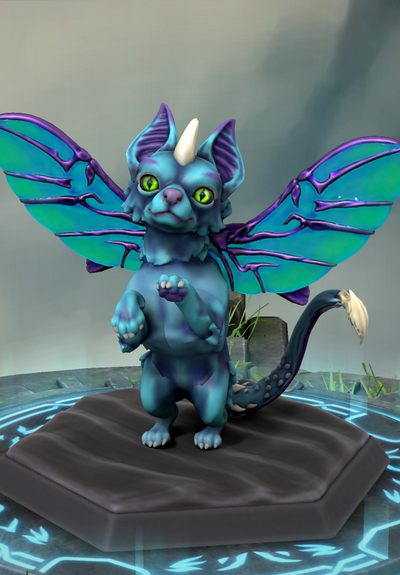
A bit more kitbashing, here; the chihuaha model has been sized up and wings that aren’t normally allowed have been stuck on it. I like how it turned out. My spouse thinks it looks like a cat.

3 Likes

I’m forced to agree with your spouse, but I can’t think of a dog breed that looks more like a cat than chihuahua’s do anyway. I think it’s mostly the tail, though. Canids don’t tend to have tails that long in proportion to their bodies, so it sends the wrong signals.

Fun coincidence for me personally, the longhaired hippy superhero that I’m running in a Supers RED game currently has butterfly wings owing to another PC granting him the flight power for a while. He’s pretty enthused about it, honestly. Neat to be able to flutter around when he’s not tripping balls.

1 Like

Sentinel Comics buys Venture Comics and has to integrate all the IP with all the other IP, so now they have to deal with the fact that there are Mubbloxians and Morbloxians.

1 Like

I will let my spouse know! I expect they will be happy to be proven right. :wink:

1 Like

“martinmichel99” is one fairly tricky AI spambot. For those who don’t get it, if you quote their message (which has probably been vanished already if we’re much past this post) there’s a hidden link embedded in it just after the comma before “file sharing tools” - not sure how well that works for proliferating the link since I don’t think it can be accidentally clicked on, but still absolutely insidious.

Suggest everyone do a “quote test” or check new user accounts for posted links (which is how I spotted it) in the future. These things are getting way too good at faking human posts, and that’s only going to get worse.

3 Likes

Post is still there, not flagged or hidden or anything.

Yeah, I noticed the spambot nature of the comment and flagged it for the mods, but I assumed it was going to be one of those ones that goes back and edits posts after the fact to make it look like people liked the links. That’s way more sneaky.

Hopefully the mods get to it soon.

1 Like