The History of Venture Comics!

I mean, he’s already a human trafficker, he’s kind of scum to begin with even if he’s chill about it.

That’s part of the reason, yeah. The other part is that the default villainous vehicle approach can only add minions to existing groups of minions and there’s a very high chance that Autonomous Traps will not be an existing group of minions for very long.

But yeah, the traps are pretty nasty. The idea, in theory, is that one trap goes off, the players realize how nasty they are, and then taking them out becomes high priority because they’re pretty easy to kill. So they serve the primary purpose of being distractions with some teeth if you ignore them. And since they’re rolling 2d6 instead of 1d12, they have similar average damage but they’re a lot less swingy (especially on the Hinder, which will very rarely hit the -1 or -4 tiers.)

2 Likes

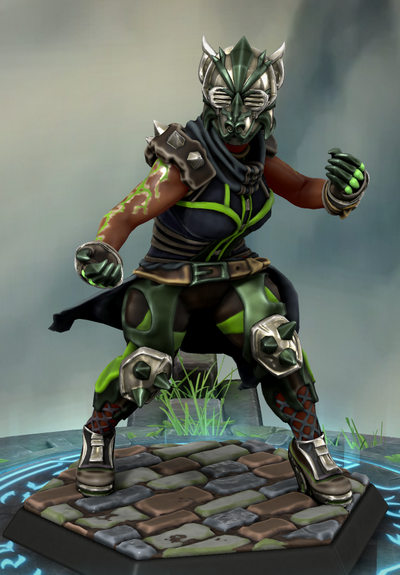
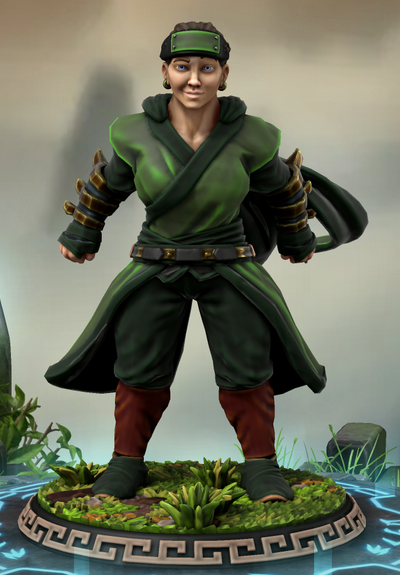
Greenheart (Ninja)

Real Name: Valeria Tertia, First Appearance: Into the Green #326, June 1990
Background: Exile, Power Source: Higher Power, Archetype: Shadow
Personality: Sarcastic, Principles: Equality, Stealth

Status Dice: Green d8, Yellow d8, Red d10. Health: 32 [Green 32-25, Yellow 24-12, Red 11-1]
Qualities: Conviction d10, Stealth d10, Close Combat d8, Imposing d8, Champion of the Green d8
Powers: Plants d10, Animal Control d8, Strength d8, Awareness d8

Green Abilities:

  • Shadow of the Green [ I ]: At the start of your turn, remove any -1 penalties on you.
  • Blessed Champion [A]: Attack using Close Combat. Remove one physical bonus or penalty, Hinder a target using your Min die, or maneuver to a new location in your environment.
  • Hidden in the Long Grass [A]: Attack using Stealth. Defend using your Min die against all Attacks until your next turn.
  • Principle of Equality [A]: Overcome to protect the rights of the underprivileged and use your Max die. You and each of your allies gain a hero point.
  • Principle of Stealth [A]: Overcome to infiltrate somewhere or avoid detection and use your Max die. You and each of your allies gain a hero point.

Yellow Abilities:

  • Eruption of the Green [A]: Attack multiple targets using Plants. Use your Mid die. Hinder all targets damaged by this ability with your Min die. Hinder yourself with your Max die.
  • Thrill of the Hunt [A]: Attack using Animal Control, and Boost all nearby heroes taking Attack or Defend actions using your Min die until your next turn.
  • Invulnerable Spirit [R]: When you would take damage, Defend against that damage by rolling your single Conviction die.

Red Abilities

  • Move Silently [A]: Hinder any number of close targets using Stealth. Use your Max die. End your turn elsewhere in the scene.
  • Abandon Subtlety [A]: Hinder any number of targets in the scene using Plants. Use your Max+Min dice. If you roll doubles, also Attack each target using your Mid die.

Out

  • Hinder an opponent by rolling your single Conviction die.

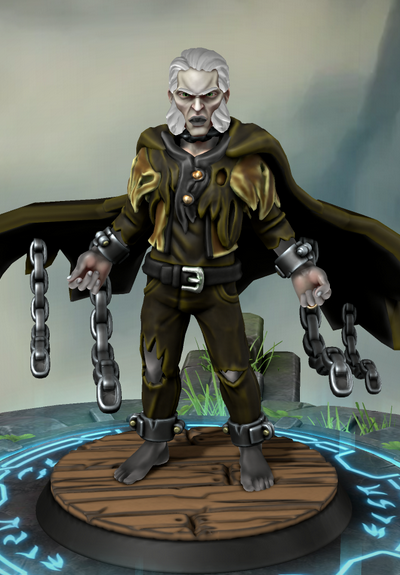
Greenheart’s history across the Iron Age was a rollercoaster of critically-acclaimed successes and disastrous failures. After the Consul arc failed to ignite support for the character with fans, and Onryo and Iwanesaku restored her popularity, the heroine spent some time in Grovedale facing off with her old rivals and reigniting her romance with Caliban, during which the title both developed a fervent core fanbase. But as the speculator market boomed in 1990, the new editor-in-chief Gordon Muriel didn’t want a fervent core. He wanted merchandisable characters, big splash pages, variant covers. Seeing the spike in sales that followed the introduction of the Iwanesaku, he demanded a new change to Greenheart’s status quo, resulting in the much-mocked Greenshadow arc.

The arc began in Greenheart #325, pitched as “The Day The Green Died”. Mysterious villains infiltrated True Rome, stealing the relics that sat at the heart of the Trials and leaving evidence to suggest that the perpetrator was Greenheart herself. Aquila knew this wasn’t possible; he’d already been through this once with the Greyheart situation. But his political position was tenuous, and he reluctantly informed Greenheart that until she could clear her name, she was exiled from True Rome. He would ensure that none of the city’s few champions came after her, but he begged her to find the stolen relics and restore their fractured city to peace.

Greenheart quickly realized that her old foe Onryo was the true criminal, having stolen the relics in order to integrate them into the Iwanesaku’s rites as she had tried before. She followed the ninja leader to Japan, and was promptly flattened by her forces. An old ninja master named Ryu saved her, and told her that to fight ninjas on their own territory, she would have to master the shadows of the Green, not merely its face. He began to train her in the ways of ninjutsu, teaching her to use her mastery over the natural world to hide all traces of her passing and strike from the darkness.

The storyline was terrible, but it still managed to secure a decent number of fans, mostly among people with very little cultural understanding of Japan. The original Iwanesaku story had featured writers with at least some understanding of Japanese myth and legend, but this one was written entirely from a viewpoint of pop culture Japanophilia. Greenheart wasn’t the right hero to become a shadow in the night, and most of her supporting cast vanished for a year and a half while she lived in Japan and built up a new cast of stereotypes and clichés. She didn’t exclusively fight against ninjas, of course; Coven followed her to Japan and created a deadly third front in the war, and she tangled with the Tempest Crew once when they came to steal Japanese Imperial treasures. But most of her foes from #326 to #342 were Japanese-themed villains who never returned after their first appearances.

In the end, Greenheart defeated Onryo in a ninja duel and recovered the relics, returning them to True Rome and clearing her name. In doing so she reinforced Aquila’s rule, as his faith in her was proven correct, and nearly every writer afterwards committed to pretending that the arc had never happened, at first because they preferred the more direct Greenheart, and later as the arc became a byword for accidental racism in comics. Occasional issues of Champions of Truth would have Greenheart ‘attune herself to the Greenshadow’ for a stealth mission or otherwise make minor references to her time in Japan, but the actual details of the storylines were largely handwaved away.

Behind the Scenes

I may be borrowing from Marvel here.

I love the idea that there was a very good “Greenheart Vs. Japan” arc, and then someone couldn’t leave well enough alone so we got a very bad “Greenheart In Japan” arc. Greenheart is a little bit Wolverine in addition to being a little bit Wonder Woman, so she seemed like exactly the right person to get turned into a ninja during the early 90s and for it not to stick. This probably helps contribute to the comic ending a few years later; none of the storylines have enough of an identity to really build up steam.

I do actually like this build; mostly using your Plants in conjunction with Stealth is a fun twist, and the idea of Greenheart really leaning into the stealthy hunter aspect while using abilities to remain kind of unstoppable is neat.

5 Likes

Did Venture make any licensed games? I would play a fighting game with these characters.

1 Like

There would have to be; Venture is a mid-tier publisher, and they would have been able to get at least a few titles made. I expect most of them were low-quality games pumped out in the SNES/N64/Playstation 1-2 era, with two or three that people actually enjoyed.

I don’t have any specifics in mind, but I can definitely imagine that they put out a mid-tier fighting game that remains a bit of a cult classic.

1 Like

Thursday marches on, which means that it’s time for…

Number Cruncher

Real Name: Giselle Carnegie, First Appearance: Company Town (Vol. 2) #35, March 1991
Approach: Adaptive, Archetype: Fragile
Upgrade: Mook Squad, Mastery: Behind the Curtain

Status Dice: Green d10, Yellow d8, Red d6. Health: 10+5H
Qualities: Criminal Underworld d10, Leadership d8, Investigation d8, Working The Plan d8
Powers: Deduction d10, Gadgets d8, Awareness d8, Agility d6

Abilities:

  • Prepare Your Scheme [A]: Lower two of your powers by one die size each. Increase one of your other powers to d12. Then take a basic action using that power.
  • Use Your Environment [A]: Boost using Awareness and use your Max die. Attack with your Mid die. Defend with your Min die.
  • Overextend Yourself [A]: Attack using Gadgets and use your Max+Mid dice. Hinder yourself with your Min die.
  • Duck and Weave [R]: When Attacked, Defend by rolling your single Deduction die. Also Boost yourself with the result of that die.
  • Make Your Escape [ I ]: Whenever your personal zone changes, you may immediately move elsewhere in the scene.
  • (U) Call For Help [A]: Replenish your Accountants up to the number of heroes.
  • (U) Master Behind The Curtain [ I ]: As long as you are not directly involved in the fray and are using your influence indirectly, automatically succeed at an Overcome to manipulate a situation.

Common Scene Elements:

  • Accountants (d8 minions). Shell Game: As a reaction, an Accountant may Hinder any target who Attacks a villain or villain lieutenant. Only one Accountant may do this per Attack.
  • Middle Managers (d8 lieutenants). Run the Numbers: When Middle Managers Boost a minion, they may apply the result to a second nearby minion.
  • Dummy Corporation: A seemingly-innocent business environment that secretly serves as one of Number Cruncher’s operations, with hostile security measures and cameras taking hero actions out of context.

Throughout the early issues of Company Town, Paradox’s attempts to stop Mr. Ferris from taking over Ferristown once again were repeatedly impeded by the fact that one of the main obstacles to his rise to power were the half-dozen mobs that had sprung up in his absence. Ferris and the Table were slowly crushing these mobs, bringing them back under his banner, but they were also threats to the people that Paradox cared about, and rather than try to protect villains one of her goals was to dismantle those gangs before Ferris could acquire them. Because of this, the Company Town writers needed to throw together some mobsters that would be important enough to handle storylines but not so critical that they would outshine Ferris himself. A few of Flatfoot and Fly Boy’s lower-tier villains were added to a couple of newcomers, and the most prominent of these wound up being Number Cruncher and the Syndicate.

After Ferris’s fall, Number Cruncher had set out on her own. She had always been in a position to seize funds from the Company, and the only thing that had kept her in check was fear of her boss. With him seemingly out of the way for good, the villainess decided that it was high time she stepped into the power vacuum he’d left behind. With enough of a bankroll to pick up a decent number of Ferris’s old staff, Number Cruncher set up the Syndicate, which she imagined would quickly replace the Company and take control of the city.

She was almost immediately over her head, finding herself locked in a gang war with her resources barely able to tread water. Number Cruncher had gained financial control over many of Ferris’s legitimate businesses, which left her in confrontation with Steeldriver and Conductor over the Ferris legacy, and she was battered by three other gangs on the flip side. She built complex plans, avoiding putting herself in the firing line, and worked to infiltrate local police forces and politicians to try to secure her standings, and made examples of her enemies to try and establish herself as a ruthless, vicious crime lord, but that only hardened the battle lines.

One attempt to make such an example of a local reporter by burning down his house brought the Syndicate to Paradox’s attention, and she stepped in to take it apart. Paradox had no memory of the woman from her own future and was fairly sure that Number Cruncher was destined to be killed in the internecine battles that led to Ferris’s return. She thought that Number Cruncher would be an easy victory, and was nearly taken down by the woman’s careful and meticulous attention to detail, forcing her to quickly reorient herself.

In the end, however, Number Cruncher simply worked better as a minion than a leader, which had really always been the intent of the writers. They’d enjoyed giving the minor villain some extra focus, but her position was deliberately tenuous. In one of their confrontations, Number Cruncher was able to deduce that Paradox had some sort of prophetic gift, and made a deal with Paradox, exchanging her knowledge of the gangs of the city for Paradox’s knowledge of the future. Upon discovering that Ferris was alive and at the head of the Table, and that she was destined to die fighting for her position, Number Cruncher panicked. She went directly to Ferris, swore up and down that she had only taken the Syndicate’s resources to protect them from other greedy would-be bosses, and pledged herself back to his loyalty. To Paradox’s frustration, the Syndicate was quickly dismantled and absorbed, and Number Cruncher re-integrated herself into her boss’s good graces… but she remembered that Paradox had saved her life, and when the Overseer rose her information helped the heroes to bring it down and save the world.

Behind the Scenes

This is another one of those stories I can only do because I renamed this volume to Deep Cuts from D-Listers. It’s a deliberate shift in focus for a character that’s never meant to establish a new normal - elevating a natural lieutenant to way above her capabilities and leaving her to twist in the wind, creating a pretty entertaining storyline that most people don’t really remember later.

Number Cruncher is not a very strong villain. Her health total is hilariously low, she has moderately good dice that fall apart pretty fast outside her core competencies, and she doesn’t have any really powerful abilities. But she’s got a decent minor spread, and she uses her minions to mess with anyone trying to come at her directly. And worse case scenario, she can and will make a break for it the moment she hits Red.

5 Likes

like in Batman: no man’s land where killer croc was trying to run a crew and made lite chit chat with a tailor fitting his suit. average human intelligence is sometimes forgotten as one of his abilities.

3 Likes

can’t wait till you release deep cuts. It has my 3rd favorite bit in the Venture project - the deep multi-layered meta of a quartet of adventure heroes built on the same base character sheet because the comic writer was mid at best, so the heroes are indistinct and interchangeable.

5 Likes

And I’ve got to say: setting those four up in layout was not a fun time. :wink: If I’d gotten any more frustrated I might have become…

Jacob Marley

Real Name: Jacob Marley, First Appearance: (vengeful) Christmas Fears One-Shot, December 1991

Lieutenant Type: Ally
Die Size: d8
Relation: Frenemy, Approach: Otherworldly

Traits:

  • Spectral Apparition: Jacob Marley has +2 to Hinder the wicked and to his damage saves against non-magical Attacks.
  • Vision of Horror: When Jacob successfully Saves against damage, he treats the result as a Hinder against his attacker.

Throughout the late 1970s and early 1980s, Jacob Marley remained a consistent and unusual part of Venture Comics. He worked with Veilwalker, lending her aid in bringing hope to ghosts and mortals. He traveled with the Twilight Carnival, and worked with the Champions of Truth. He even spent some time with Knightgrave, reminding Mordred that he was not damned. Marley was always present, ready to remind villains of their sins and ask them to repent.

In 1991, he stopped asking.

As the ‘extreme 90s’ took hold, the idea of a ghost kindly offering redemption was seen as quaint and more than a little bit naïve around the offices of Venture Comics, but Marley was an institution and no one wanted to be the writer or editor to end the character’s tenure. Instead, Gordon Muriel proposed a one-shot in which the Christmas Ghost was finally pushed too far, losing his faith in redemption. In the Christmas Fears one-shot, Jacob Marley attempted to wake the guilty and sorrow of a serial killer, only to witness his target double down. As the killer attempted to bear down on a family, Marley became increasingly desperate. He pushed through the veil, manifesting before the killer and allowing him to sink his blade into Marley’s heart. In the process, the killer saw his own face frozen in a rictus of death, just as Marley reached out and stopped his heart.

The act pushed Marley over the edge. His methods became increasingly morbid and terrifying, showing his targets the full horrors of death to terrify them into reform – and if they would not listen, they would be killed. His actions brought him into conflict with his old allies, as the Twilight Circus and the Drifter began to fear that Marley’s old sins were overtaking him and would consume his soul. At the same time, he was manifestly only targeting the wicked, and he lived just enough outside of the world that they couldn’t really stop him. He encouraged Ophelia to learn soul-killing magic, and supported the Remnants in their more violent approach to crime.

But in the end, vicious vengeful ghost Marley wasn’t what anyone wanted. After three years of occasional appearances, he vanished in the speculator market collapse. Four years later, he returned in a post-Ferris issue of Company Town, a story in which Groove succeeded in tracking the ghost down and down for him what he’d done for Grover so many years ago – reminding him of the power that he had to make people’s lives better, just before he could be fully consumed by rage and hatred and begin wrecking vengeance on the world as a whole. Seeing how close he had come to losing himself, Marley thanked his friend, committed himself to non-violence once again, and began working to inspire and change people, not merely to make them suffer for their sins.

Behind the Scenes:

It will probably be of no surprise to readers to know that I’m a strong believer in rehabilitative justice, and as a result that’s a bit of a theme in Venture Comics. I do truly believe that if you want to be a better person, you can, and that helping people to want that builds a much better world long-term than just punishing them. (Some people will never reach that point, of course; Venture has plenty of villains who will never become heroes. But they could, if they wanted to. That’s part of the tragedy of it.)

Marley embodies that, usually, but the world can get cynical, and I can too. Sometimes I just want people to actually pay a price for hurting others, even though I know it’s not going to make the world a better place. And the 90s seemed like the right time for Marley to feel similarly. He stays a Support and not an Enemy because he never goes all the way from punishing sin to just targeting anyone, but he definitely approaches that line before Groove brings him back. When you’re a literally manifestation of your own psyche, it’s a bad idea to stew in hatred, and even if Marley occasionally has to take physical action, he’s got too much sin in his past to enact violence without it leaving a mark.

But I can absolutely envision someone saying “Wouldn’t it be awesome if Christmas Carol was an actual horror movie?” and a whole comic being created from that premise.

Marley’s cape is absolutely inspired by Spawn, although it’s a little bit less over the top because I could only stretch the parts so far and make them look decent.

5 Likes

His old sins were usurious moneylending, appalling greed, and being generally miserable toward people rather than outright murder. That’s a whole new sideline for the guy.

Now if he’d started acting as a ghostly loan shark, that would be some real backsliding there.

Wreaking, not wrecking. Common mistake further complicated by some auto-correction apps, but still a mistake. Wreak literally used to be synonymous with “avenge” but that’s archaic these days.

4 Likes

Well, today I learned something new… :thinking:

(Not a surprise — small town education doesn’t make for a great vocabulary. :smirk:)

4 Likes

Like I said, common mistake. I’ve had people try to tell me I’m spelling “wrecked” wrong, but it’s not even pronounced the same - homophonic with “reeking” because that’s what English needs, more words that sound the same but mean something entirely different. :slight_smile:

4 Likes

That’s because English isn’t a language, it’s twelve half languages in a stolen trenchcoat

4 Likes

Jackelle

Real Name: Unknown, First Appearance: Rogue Agents #22, August 1992

Lieutenant Type: Enemy
Die Size: d10
Motive: Power, Approach: Technological

Traits:

  • Toxic Claws: When Jackelle Hinders, she also deals damage to her target equal to the penalty created.
  • Bloody Mess: When Jackelle fails a damage save, treat the result as a Boost for herself. She must target her attacker with her next action if possible, using that Boost.

Most early Rogue Agents stories had one of two fairly similar themes to them, even if the specifics varied greatly. In the first, agents of Guardian would come after Matrixx and Kynetic, putting innocents in danger to try and lure out the heroes. The Rogue Agents would then engage with the villains and either kill them or hurt them badly enough that they had to be recovered by Guardian. In the second story framework, the Rogue Agents would find a new subsidiary or program of Guardian Industries, usually through Matrixx’s investigation skills, and over the course of a two-parter they would determine what the subsidiary was up, face off against a villainous enforcer or robotic threat, and ultimately bring down the program and save whatever locale or population it was experimenting on.

Jackelle was part of one of the latter groups. In Rogue Agents #22, she was introduced as a nameless young homeless woman that was approached by Guardian personnel for ‘medical experiments’, which they promised would give her power. Jackelle wanted power, and she was willing to take risks to gain it. She joined the program, and was injected with cyber-nanites designed to create new agents like Kynetic, able to interface with advanced technology and shift from subtle infiltrators to armed killers. Jackelle reveled in her new power, not knowing how many of her fellow street people had died. When Matrixx and Kynetic arrived to shut the program down, she was one of the Augments that tried to stop them, vowing that no one would make her feel powerless again.

Kynetic plowed through Jackelle and her allies; even with their new technological upgrades, they were no match for his combat skills. Most of the Augments never appeared again; the program was shut down, the dead were mourned, and the local homeless population was safe from predation. But the writers of Rogue Agents liked Jackelle’s style, and she continued to pop up as a minor enforcer for Guardian, with a short fuse and a chip on her shoulder about having been defeated. Despite that, she never really became anything more than that; she was an easy minion to toss into the mix when the team wanted a bruiser, but they never got so far as to give her a name or a motivation beyond “don’t be powerless again”. When Guardian was destroyed, Jackelle was presumed destroyed with them – until another artist drew her into a scene as a bit of a fond remembrance, not even giving her lines. She would continue to pop up every couple years, somewhere between an easter egg and an artist joke, and those fans who remembered her were always glad to see her – even if she always ended up soundly beaten.

Behind the Scenes:

Jackelle exists for the same reason she does in the Venture metaverse; I accidentally gave a different character a jackal mask and eighties shades, and I thought the look was neat/silly so I saved it for an extreme lieutenant.

Aside from that, she’s one of those characters that there’s just not much to. She has a neat design, so artists toss her into things, but she has no character or personality and she was established to not be that tough in her first appearance. She just shows up, gets beaten up, and she’s gone for another year or two. I do like her vengeance damage save effect; if you hit her, she hates you and will hit back.

3 Likes

Pretty effective combination of abilities there. Bloody Mess encourages players to try to hit her with massive damage to prevent her even getting a save, but that’s a strain until she’s been degraded a bit so it should get at least a use or two before she’s out.

1 Like

It’s fun because it’s a bit of both. Bloody Mess makes her a pain to take down, but also it means that the party’s biggest tank get land the first blow and force her to spend her time going after them instead of targeting weaker people. I like how the combo works.

1 Like

If you can scrape up enough damage and actions to get her degrade multiple times before she acts she could wind up losing the chance to use some of her bonuses - eg Hero A smacks her down to a d8 and she gets a +2 bonus against him for her next attack, but then Hero B knocks her to d6 and gives her a +1 to use on him next turn. When she acts next she could hit either one of them, but the unused bonus will go to waste.

1 Like

Today’s update takes an existing Deep Cut storyline, expands it, and then cuts it into two. So for everything to make sense, I need to post the changed text to the previous one, too! We open up with the text for Iron Age villain Acid Rain:

In 1993, George Ngyugen and Leila Connors, who had guided Spectacular Skybreaker as their first major title after the departure of Charity Garrett, chose to move on to other things. They were replaced by a team made up of relative newcomer Freddie Wicks and veteran artist John Harrow. Wicks loved Skybreaker and his mythology, but felt that the series had grown a bit too comfortable over the course of the early nineties while other stories were getting edgier and more violent. As Spectacular Skybreaker approached its hundredth issue, he pitched a bold new direction for the series, that would make it epic and impressive while keeping the core themes intact. Muriel loved the premise, and the result was trumpeted in marketing as the final issue of Spectacular Skybreaker, for issue #100Acid Rain.

Wicks had noticed that, through some quirk of publication, Wayne Alton had never returned to the pages of Venture Comics after his theoretical retirement back in the 1950s. It had been hinted that Lamont had left his spear for another to take up, but the details were never made clear. Seeing an opportunity to tie Skybreaker’s story more fully to the Golden Age incarnation of the character, he retconned Alton’s story to end differently.

The revised backstory created for Acid Rain explained that the first Skybreaker and Cormorant had defeated the Fomorians in the 1950s, sealing them away for a generation. However, during the final battle Alton had been forced to use his power over water to enter the gate to the Dark Sea, sealing it shut from the other side and leaving himself trapped in a darkness that Lamont could not save him from. Lamont believed that his friend was dead, and mourned his loss, but Alton survived the Dark Sea and the Fomorians who tried to capture him. Slowly infected by the power of the Sea, he retained his burning hatred of Balor and the Fomorian Realm and became a second cancer within it. He began to infect Fomorian soldiers with his toxic hatred, gathering an army of sacrificial minions which he intended to use to return to Earth, conquer it, and rally its forces to destroy the Dark Sea once and for all.

In Spectacular Skybreaker #100, Alton finally returned to Earth to discover that his mentor was long dead and a usurping demigod held his spear! Declaring himself to be an Acid Rain upon the world, Alton attacked Skybreaker and his allies and shattered the spear of Assal, taking its power into himself and conquering Grovedale.

In the aftermath of the battle, Spectacular Skybreaker ended and was replaced by a twelve-issue limited title: Broken Sky. Grovedale was locked away from the rest of the world, and the Champions of Truth were unable to intervene as a weakened Skybreaker sought to undo the damage that Acid Rain was causing as he gradually expanded his domain. The storyline featured both Skybreaker and several of his villains being forced to join forces to deal with Acid Rain’s corrupted minions, and Wicks was certain that his characters would leave their mark on the world of Venture Comics when he unveiled…

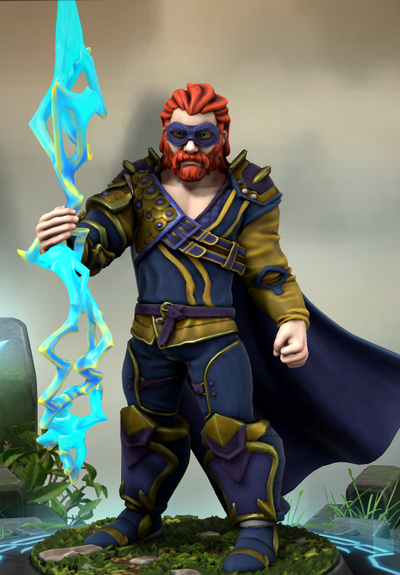
Skybreaker (Spearless)

Real Name: Cooper Cullan, First Appearance: Broken Sky #3, August 1993
Background: Adventurer, Power Source: Supernatural, Archetype: Flyer
Personality: Natural Leader, Principles: Principle of the Hero, Principle of Family

Status Dice: Green d6, Yellow d8, Red d12. Health: 32 [Green 34-24, Yellow 23-12, Red 11-1]
Qualities: Close Combat d10, Banter d10, History d10, Fitness d6, True Demigod d8
Powers: Intuition d10, Flight d10, Weather d8, Strength d8, Presence d8

Green Abilities:

  • Crash Down [A]: Attack up to three targets using Flight. Apply your Min die to each of them.
  • Perfect Warrior [A]: Attack using Intuition. Defend against all Attacks against you using your Min die until your next turn.
  • Principle of the Hero [A]: Overcome in a situation in which innocent people are in immediate danger and use your Max die. You and each of your allies gain a hero point.
  • Principle of Family [A]: Overcome in a situation where you have been given advice from a family member and use your Max die. You and each of your allies gain a hero point.

Yellow Abilities:

  • Champion of Ulster [A]: Boost an Ally using Presence. You and nearby heroes in the Yellow and Red zones Recover Health equal to your Min die.
  • Winds of Assal [A]: Boost or Hinder using Weather, and apply that mod to multiple close targets.
  • Turn Aside [R]: When you are Attacked while flying, you may Defend yourself by rolling your single Close Combat die.

Red Abilities

  • Spear of the Winds [A]: Attack using Weather. Use your Max+Mid dice.
  • Demigod’s Might [A]: Overcome using Strength in a situation that requires you to be more than humanly capable. Use your Max+Min dice. Boost all nearby allies with your Mid die.

Out

  • Boost an ally by rolling your single Banter die.

The first two issues of Broken Sky featured a mostly-powerless Cooper Cullen fighting on the streets of Grovedale, rallying his supporting cast to create safe places for the citizenry and to hide from Acide Rain’s newfound rule. With his spear broken, Cooper had lost his command over the skies and his ability to strike down Fomorians; he still had a measure of his godly strength and vigor, but otherwise he was as mortal as anyone else.

Wicks had a plan to build the hero back up, however. During a battle with one of Acid Rain’s chief lieutenants, Rhonda and Max were endangered, about to be struck down. Struggling to save them, Cooper was able to tap into the divine rage of Cu Chulainn, which he had thought long lost to him. He formed a spear of radiant energy, striking the villain dead on the spot.

Over the next several issues, Cooper learned to tap into his power. Shadowspear appeared, teaching him to call forth the winds from inside. Locksmith, while dipping into his secret caches of smuggled goods to feed the people of Grovedale, told Cooper that he had given up on taking the spear because only a demigod could wield it safely. Even the Driver appeared, giving laconic advice on focus and determination that Cooper used to call up the radiance within.

His newfound powers amplified his strength and returned the winds to him. Cooper could leap into the air, flying through the skies with incredible speed and force to crash down on his enemies, summoning a spear of light and wind to strike down his foes. With his newfound power, he challenged Acid Rain one on one, battling both his ideology and his direct might, and took back the broken Assal from him, breaking the barrier around Grovedale and saving the day. Now spearless, Skybreaker resolved to use his own strength to protect those he cared about.

To say that this storyline was not popular would be a dramatic understatement.

To begin with, Skybreaker’s spear was iconic. His readers didn’t want him to learn to channel divine energies unarmed and throw bolts of radiant energies, or to fling himself through the air and use the winds to fly around his foes. To make things worse, the bleak, apocalyptic Grovedale also upset and annoyed not just his own readers, but the readers of Into the Green and Champions of Truth, both of which had ongoing storylines pre-empted by the editorial mandate to lock the city away. On top of all of that, turning a beloved Golden Age sidekick into a bleak, edgy supervillain annoyed almost everyone, from those who didn’t remember Cormorant or care about him to those that remembered and cared quite a bit. It had happened far too late and far too forcibly to feel like a reasonable continuation of his storyline.

Wicks and Harrow tried to stick it out, relaunching Spectacular Skybreaker with issue #101 in June 1994. But by then, the speculator market collapse was in full swing, and Spectacular Skybreaker was in significant danger of joining Pardoner, Remnants, and Broken Mirrors on the cancellation line. In May 1995, both Wicks and Harrow abruptly left the title; Harrow retired from comics, and Wicks moved back into independent titles and never wrote for Venture again.

As one of his last acts as editor-in-chief, Muriel cajoled Charity Garrett to come back to the title she had revitalized once already, to spend three years building Skybreaker back up. Her tenure started in July 1995 with Spectacular Skybreaker #113, in which Shadowspear returned to help Skybreaker repair the Spear of Assal and return enough of his godly essence to it to recover his old life. Acid Rain stayed dormant until the Night of Lost Souls, in which he returned from the dead as a member of Greyheart’s army, was purified by Solace, and joined with Lewis Lamont one final time as an agent of justice before finally being sent to a peaceful rest.

Behind the Scenes

Whew!

I already discussed this storyline way back when I did D-Listers for the first time, but I couldn’t let the 90s go without actually writing up this terrible Skybreaker variant! And he’s not great. Mechanically he’s okay, but he sort of does the opposite of what a lot of builds do, punching with lower dice in Green and then shifting to more Boosts and Hinders in Yellow. Supernatural has that incredibly weird “get a free d10, but it has to be from a wildly narrow list”, so Skybreaker picks up Intuition to pair with not very much because his qualities aren’t great.

The storyline itself doesn’t need too much more conversation; I got to name drop a few villains that help fight Acid Rain, that’s nice.
5 Likes

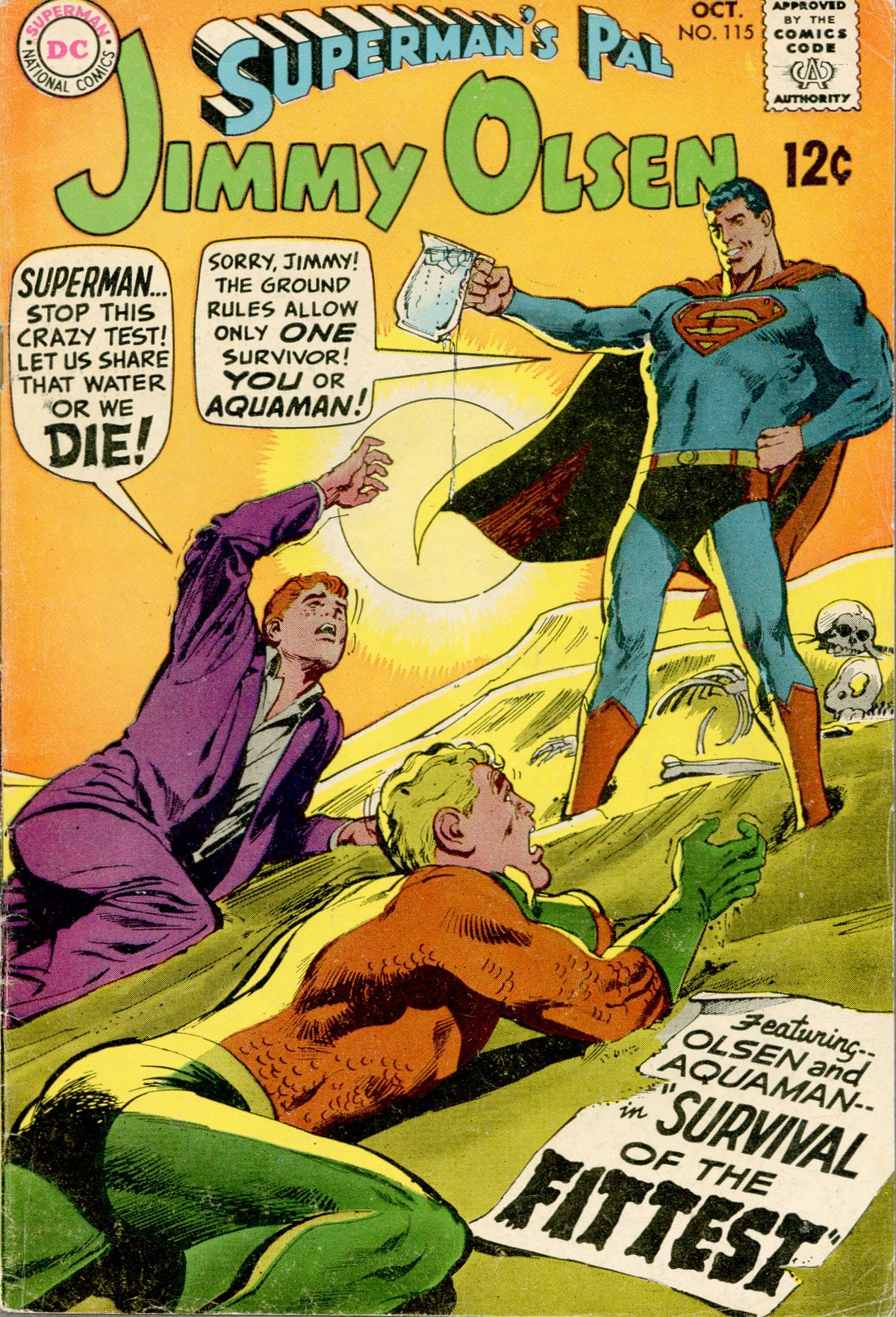
Inspired in part by the many times Thor’s managed to “lose” Mjolnir over the years? I kind of miss the days when he couldn’t part with it for more than a minute without turning into a gimpy human guy, but I suppose that’s as old-fashioned as Aquaman fatally dehydrating on a strict time limit.

Having some trouble with the math there. Base 8 + Red status 12 + Strength 8 = 28. Did you opt to roll a d8 (getting a 6) rather than taking the fixed 4 at the last step in the calculations?

I dig the lightning spear look. What is that, a spell effect?

1 Like

Yep, Spearless Skybreaker was heavily inspired by hammerless Thor!

For the Health, you are correct. I blanked and forgot that History is Information and not Mental and included it in the calculation instead of Strength.

And the lightning spear is actually two spell effects kitbashed together to look like a single one, and stretched out to make them more spear-like! If you look really close, you can sort of tell that Skybreaker isn’t actually holding it, he’s just got his hand in a holding post and the spells are set up around it.

1 Like

I remember back when the Supersystem minis game was getting loads of new minis through Old Glory I suggested to the guys responsible that they should do some flying-pose supers that were effectively held aloft by SFX “bases” - lightning bolts, power blasts, even a lamp post or I-beam being swung into the ground. Sadly nothing ever came of it, the closest I’ve seen out of them was a “jet propulsion” effect coming out of a model’s backpack.

Pity, given how creative the sculpts have been for Heroclix and…is it Marvel Crisis Protocol? The skirmish minis game from Atomic Mass Games.

2 Likes